Most fallen hardwood leaves are fine for isopods. Where the leaf came from matters more than which tree it fell off. A clean maple leaf from an unsprayed yard is a better bet than a perfect oak leaf from a treated lawn. This page lists what keepers use, what they avoid, and how to collect safely.
Leaves keepers rely on
| Leaf | Notes from the hobby |
|---|---|
| Oak (including live oak) | The default. Widely available and long-lasting. Live oak is small and firm; larger oaks are a little softer. |
| Maple | Thin and popular. Eaten quickly, so it needs frequent topping up. |
| Beech | Similar role to oak. Holds up well. |
| Magnolia | Large and thick. More cover than food, and slow to break down. |
| Sea grape | Big round leaves. Keepers use them for hides and humidity. |
| Indian almond (catappa) | Sold for aquariums and used for isopods too. Softens fairly fast. |
| Fruit trees such as apple and pear | Used by keepers who have unsprayed trees. Orchard leaves are often sprayed, so check. |
A mix works well. Soft leaves feed the colony now. Firm leaves are still there as cover next month. We compare the common options in live oak versus other leaves.
Leaves keepers avoid
- Anything that may have been sprayed. Pesticide, herbicide, and lawn treatments are the main risk, and you cannot wash or bake them out. This rules out most roadside, golf course, and treated-lawn leaves.
- Black walnut. The tree produces juglone, a compound that suppresses other plants, and keepers generally steer clear of the leaves.
- Eucalyptus. The aromatic oils are the concern. Commonly listed as one to skip.
- Pine, cedar, and other conifers. The traditional advice is to avoid them because of resins. Some experienced breeders report that isopods eat well-aged conifer material without harm, so this one is disputed. If you are new, leaving them out costs you nothing.
- Green leaves picked off the tree. Isopods eat dead, decaying leaves. Fresh green leaves rot wet and can mold heavily.
- Leaves you cannot identify. If you do not know the tree, you do not know what is in the leaf.
Keeper experience is the source for most of this, not controlled studies. Where breeders disagree, we have said so.
Collecting your own: a short checklist
- Know the tree. Identify it by the leaf, bark, and acorns or seeds.
- Know the ground. Collect only where nothing has been sprayed, and ask the neighbors if the tree overhangs their yard.
- Stay back from roads and parking lots.
- Take leaves that fell on their own and dried brown. Skip green, wet, or slimy ones.
- Pick from the top of the pile, not the damp bottom layer where most hitchhikers live.
- Shake and sort out sticks, acorns, and debris.
- Decide whether to heat-treat. See do you need to boil or bake leaf litter?
- Dry them fully before storing, and keep them sealed and dry.
When buying makes sense
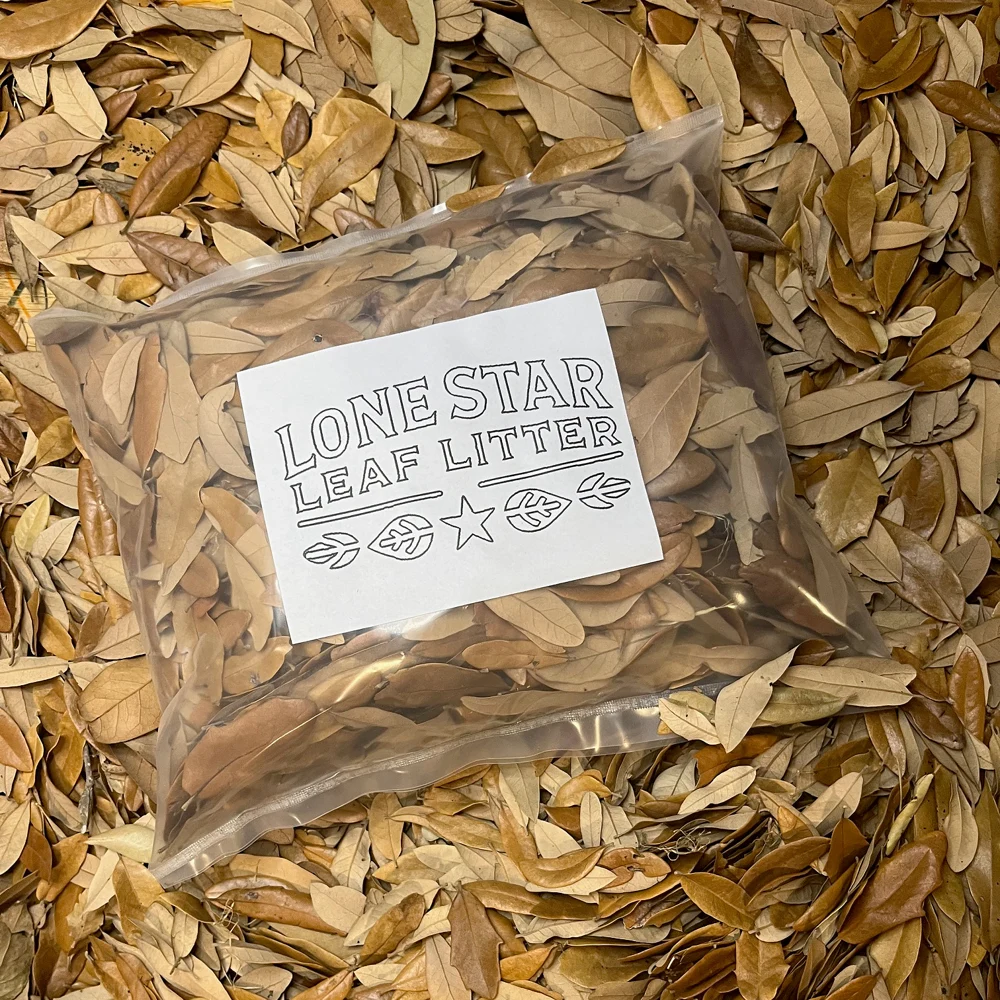
Collecting is free if you have the right tree on clean ground. Many people do not. Live oak in particular drops most of its leaves in a short window in spring, so even in Texas there are long stretches with little on the ground. Buying gets you a known tree and a consistent leaf, sorted and dry. Ask any seller the same questions you would ask yourself: which tree, where it was collected, and what was done to it.
Ours are Texas live oak, hand-collected by our family in South Texas, sifted twice and winnowed. They are screened, not sterilized.
Quick answers
Can isopods eat oak leaves? Yes. Oak is the most commonly used leaf in the hobby.
Are live oak and regular oak the same for isopods? Both are used. Live oak leaves are smaller and tougher, so they last longer and get eaten more slowly.
Do the leaves have to be brown? Yes. Dry, brown, fallen leaves are what you want.
How much do I need? See the leaf litter sizing chart. For setting up the culture, see leaf litter for isopods.
More from the leaf ranch
- Leaf litter for isopods: choosing and using live oak
- How much leaf litter you need, by enclosure size
- Do you need to boil or bake leaf litter?
- Leaf litter for dart frog vivariums
- Live oak compared with other leaves
- What leaf litter is and how to use it in a terrarium
Skip the leaf hunt
Pick from 1–4 gallons and buy direct or choose your marketplace.
Shop Texas live oak leaf litter →