Short answer: it is optional, and keepers disagree. Heat-treating leaves lowers the odds of bringing in hitchhikers. It does not make them sterile, and it changes the leaf. Whether it is worth doing depends on where the leaves came from and what lives in the enclosure.
What people are trying to prevent
Leaves that have been on the ground can carry small passengers: mites, snails and their eggs, slugs, spiders, fungus gnats, and in some places small predatory worms. Most are a nuisance. A few, such as slugs in a frog tank or predatory mites in an isopod culture, are a real problem once established. Leaves can also carry whatever was sprayed nearby, and no amount of heat removes that.
The case for treating
- It reduces live hitchhikers and many eggs.
- It costs little: a pot of water or a low oven.
- It matters more in a dart frog vivarium or a rare isopod colony, where one introduced pest is hard to remove later.
The case against
- It is not sterilization. A kitchen cannot guarantee that every organism or egg is dead, and the enclosure itself is full of life within days.
- It changes the leaf. Boiling leaches tannins and softens the leaf, so it breaks down sooner. Baking makes leaves brittle, and they crumble when handled.
- Many keepers with a healthy cleanup crew add clean, dry, known-source leaves without treating them and have no trouble.
The methods keepers use
These are the instructions you will find from sellers and long-time keepers. They vary because nobody has a tested standard.
| Method | What is commonly suggested | Trade-offs |
|---|---|---|
| Boil | Submerge and boil for about 5 to 10 minutes, then drain and cool | Thorough wetting and heat; leaves go in soft and damp, and lose tannins to the water |
| Bake | A low oven, with published figures running from about 140°F to 210°F for 15 to 30 minutes | Keeps leaves dry; makes them brittle; needs watching |
| Freeze | Several days at 0°F or colder | Easy and does not change the leaf much; many eggs and cold-hardy organisms survive it |
| Rinse only | Rinse under running water, then dry | Removes dust and loose debris; does little about hitchhikers |
A safety note on baking: dry leaves are tinder. Keep the oven low, keep leaves away from the heating element, and do not leave them unattended. Dampening the leaves first is a common precaution.
How to decide
- Leaves you collected yourself: more reason to treat, because you do not know what has been living in them. First make sure the ground has not been sprayed. Treatment does nothing for chemicals.
- Sensitive or valuable animals: more reason to treat, or to quarantine leaves in a separate container for a few weeks and watch what appears.
- An established bioactive tank with a strong cleanup crew: many keepers skip treatment for dry, screened leaves from a source they trust.
- Aquariums: boiling is common because it also helps leaves sink. It releases tannins, which tint the water, so check what your fish and shrimp tolerate.
What we do with ours
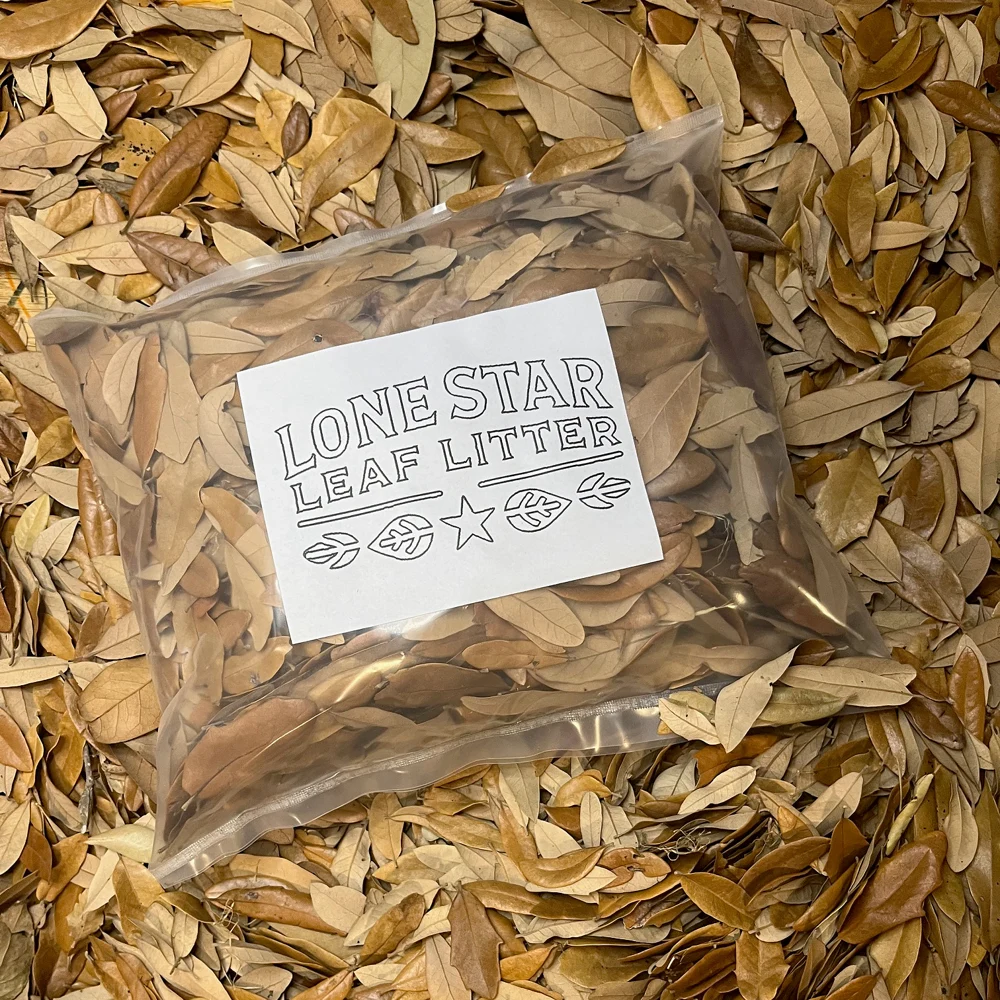
We hand-collect Texas live oak leaves, sift them twice, and winnow out grit, sticks, and dust. We do not heat-treat or sterilize them, and we do not claim they are pest-free. Look through the bag when it arrives, pick out anything you do not want, and treat or do not treat according to your own setup. Keep unused leaves dry and sealed, and check them again before each refill.
Quick answers
Will boiling ruin live oak leaves? No. They are tough and hold together well. They will be softer and will break down somewhat sooner than untreated leaves.
Does freezing kill everything? No. It is the gentlest method and the least reliable.
Do I have to dry leaves after boiling? Not for a humid enclosure. For an isopod bin with a dry side, let them air-dry first so you do not flood it. For storage, dry them completely.
For where the leaves go once they are ready, see how to use leaf litter in a terrarium.
More from the leaf ranch
- Leaf litter for isopods: choosing and using live oak
- How much leaf litter you need, by enclosure size
- Which leaves are safe for isopods, and which to avoid
- Leaf litter for dart frog vivariums
- Live oak compared with other leaves
- What leaf litter is and how to use it in a terrarium
Ready for a leaf restock?
Pick from 1–4 gallons and buy direct or choose your marketplace.
Shop Texas live oak leaf litter →